A parenting plan is a written agreement between separated parents about how they will care for their children. Parenting plans can be an important way for parties to reduce conflict in their co-parenting arrangements. A plan that manages the major aspects of child care can help parents stay on the same page.
For a plan to work effectively, it’s crucial to word provisions correctly. Every parenting plan should be tailored to the specific circumstances of each family. However, this free parenting plan template can help you with formatting and suggest wording that you can alter to your needs.

What this template covers
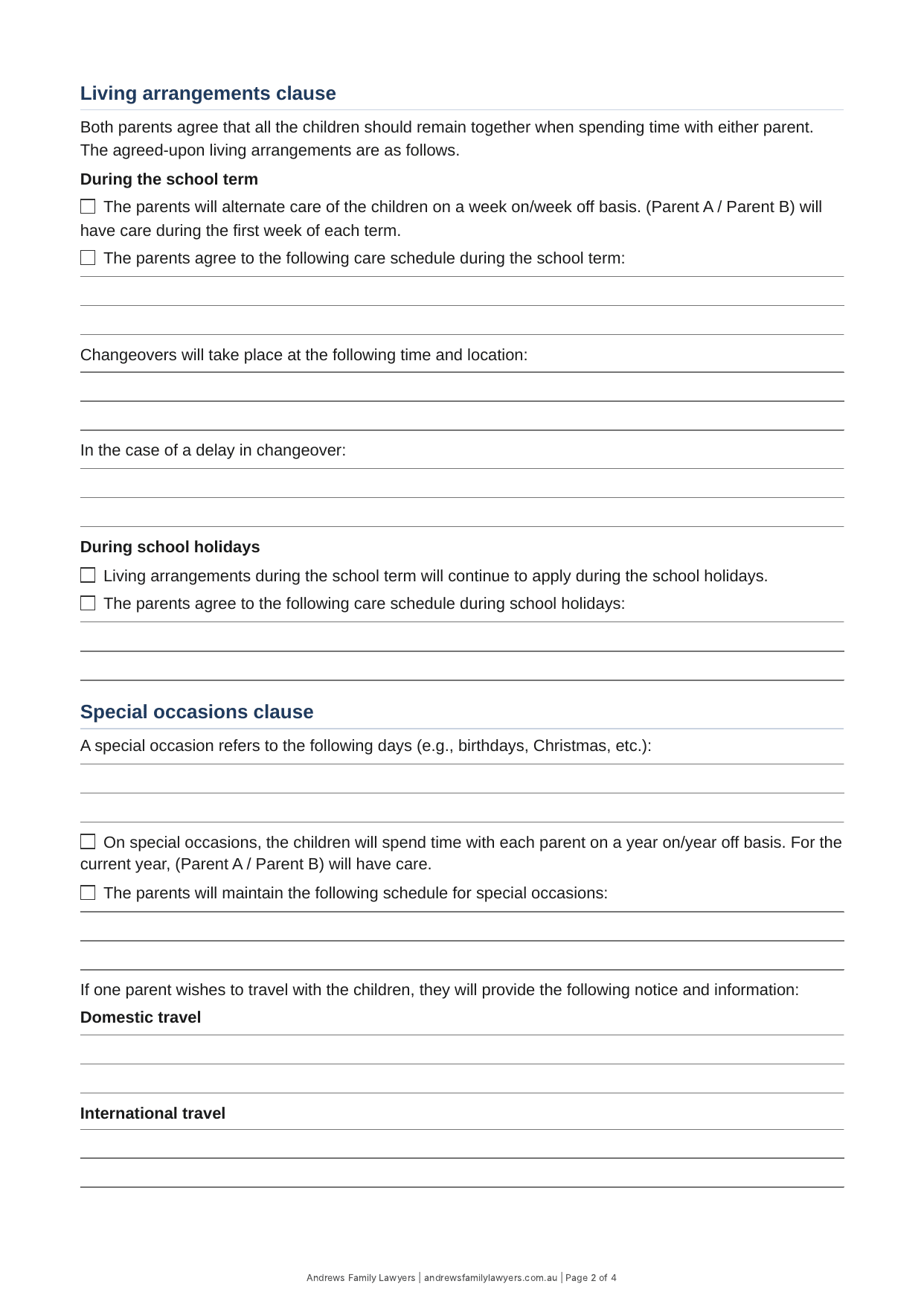
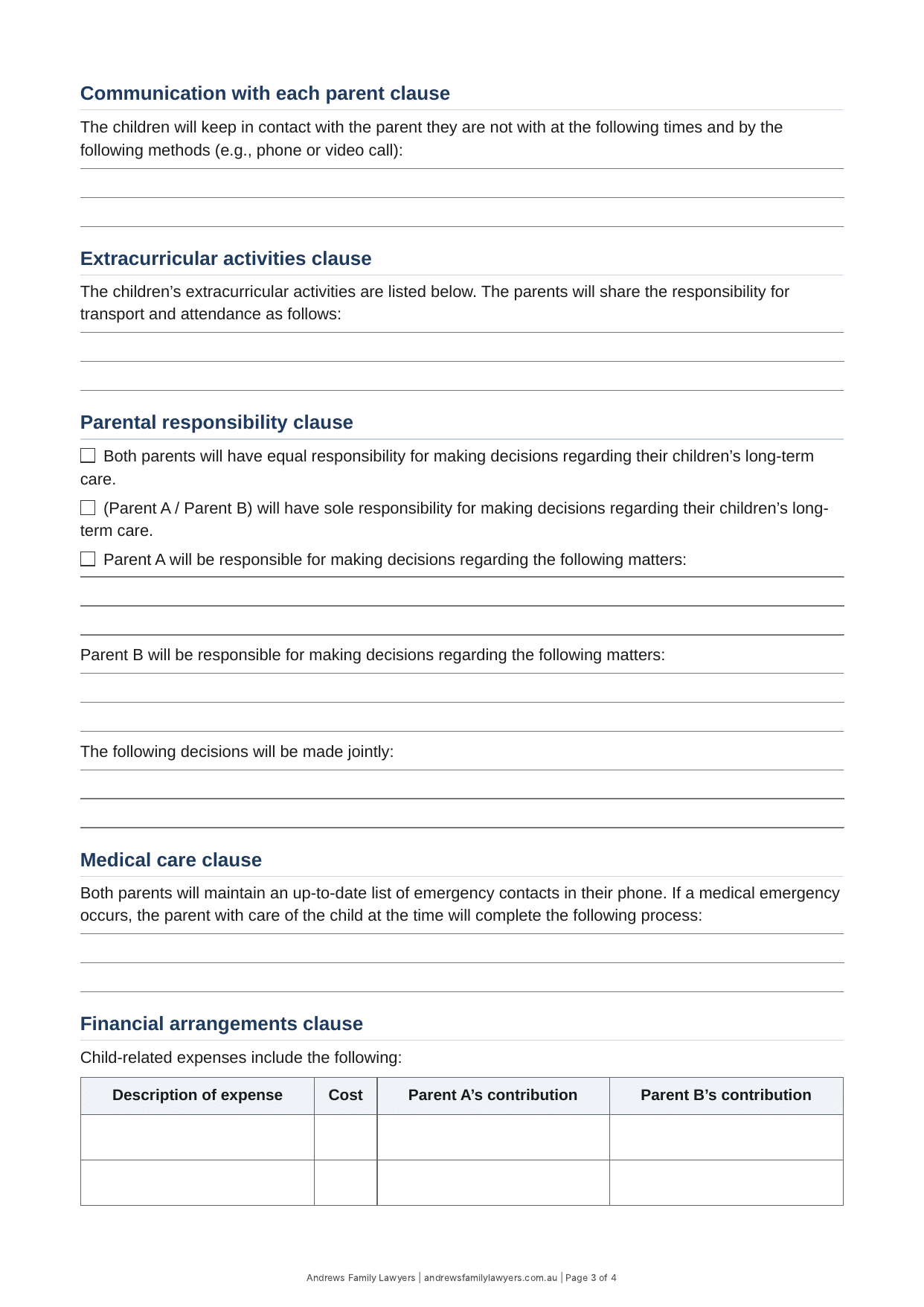
The template covers living arrangements, special occasions and travel, communication between the children and each parent, extracurricular activities, parental responsibility, medical care, expenses and dispute resolution.
How to use this template
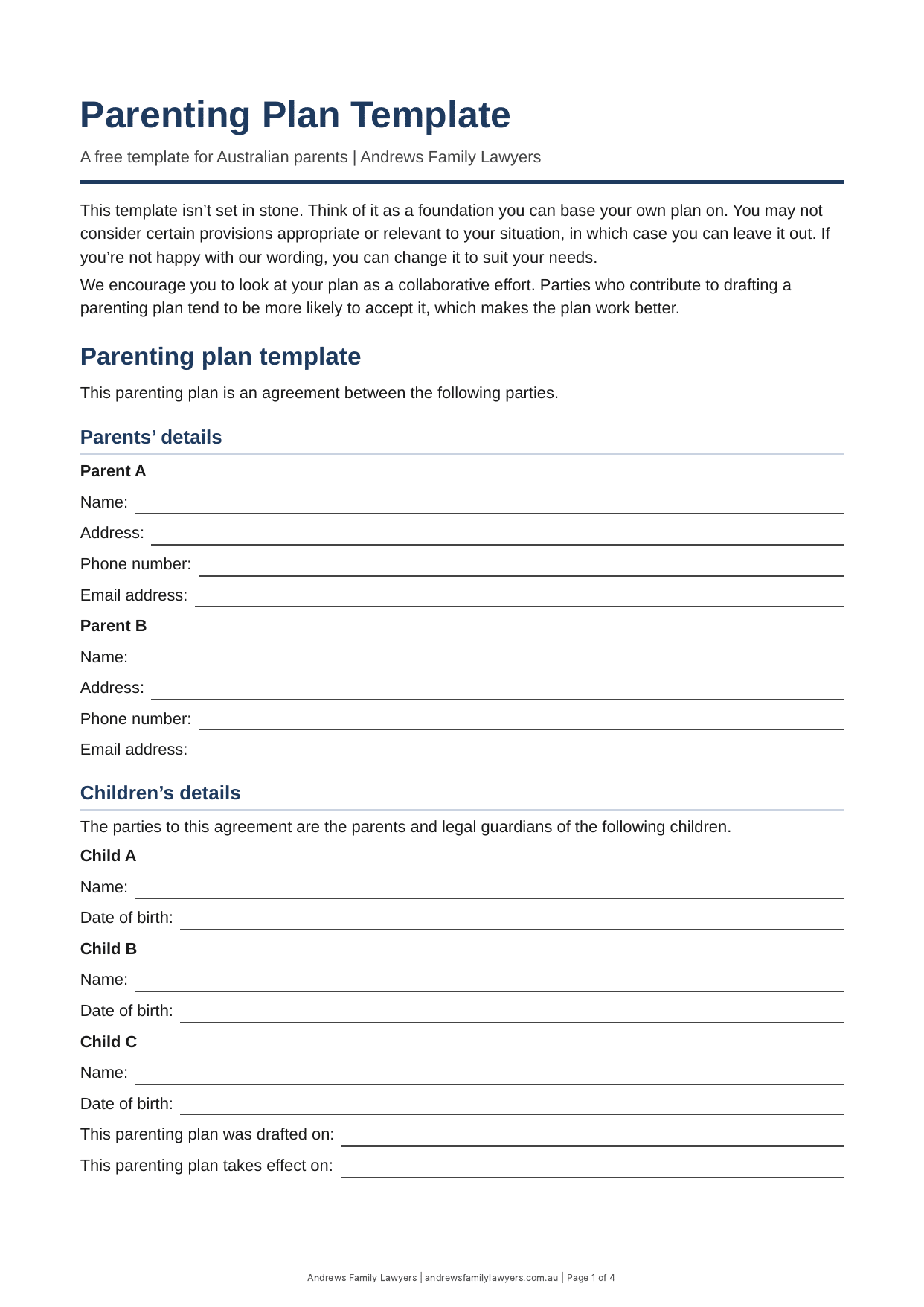
This template isn’t set in stone. Think of it as a foundation you can base your own plan on. You may not consider certain provisions appropriate or relevant to your situation, in which case you can leave it out. If you’re not happy with our wording, you can change it to suit your needs.
We encourage you to look at your plan as a collaborative effort. Parties who contribute to drafting a parenting plan tend to be more likely to accept it, which makes the plan work better.
What to do after you’ve filled it in
Once you’ve completed a parenting plan you’re both satisfied with, you have different options available. If you and your former partner are happy to stick with an informal written agreement, you can keep the plan in place throughout your child’s upbringing. This can give you the flexibility to easily review and adapt the plan as your child grows up and your parenting circumstances change. Since parenting plans aren’t enforceable by the Court, this is generally appropriate for parties who expect to remain on positive terms.
If you need more certainty, you can use your plan as the basis of a parenting consent order application. Consent orders are binding and can be enforced through the Court if they’re breached by one of the parents. You can read more about how parenting orders work and how parenting arrangements are set out.

Making appropriate provisions
What appropriate provisions look like will be different for every family. But there are some general considerations that can be useful for co-parents to think about.
Living arrangements
It’s generally beneficial to keep living arrangements as simple as possible. More than one changeover per week can be stressful on children and difficult to keep track of. You may find it more useful to point to a co-parenting app, rather than explaining the arrangement in the plan. For example:
“The children’s living arrangements are detailed in the co-parenting app ‘OurFamilyWizard’, as agreed upon by the parents. Any required alterations or communications regarding changeover delays will be handled within the app.”
Include as many details as you can about how changeovers will work. Any confusion can result in a child being left in limbo. Make sure to identify a clear channel of communication that should be used if any changes are necessary.
Special occasions
Year on/year off arrangements for special occasions are common. Consider how changeovers are handled if a special occasion falls on a day outside of the nominated parent’s regular care period.
Parental responsibility
Parental responsibility generally relates to long-term decision-making for significant issues such as education, healthcare, and religious or cultural instruction.
Medical care
If a child has an allergy or other medical concern, it can be valuable to have a strict set of steps to follow in case there’s an emergency. This could include:
- Does something need to be administered on the spot?
- Where should the child be taken?
- How will the other parent be notified?
Dispute resolution
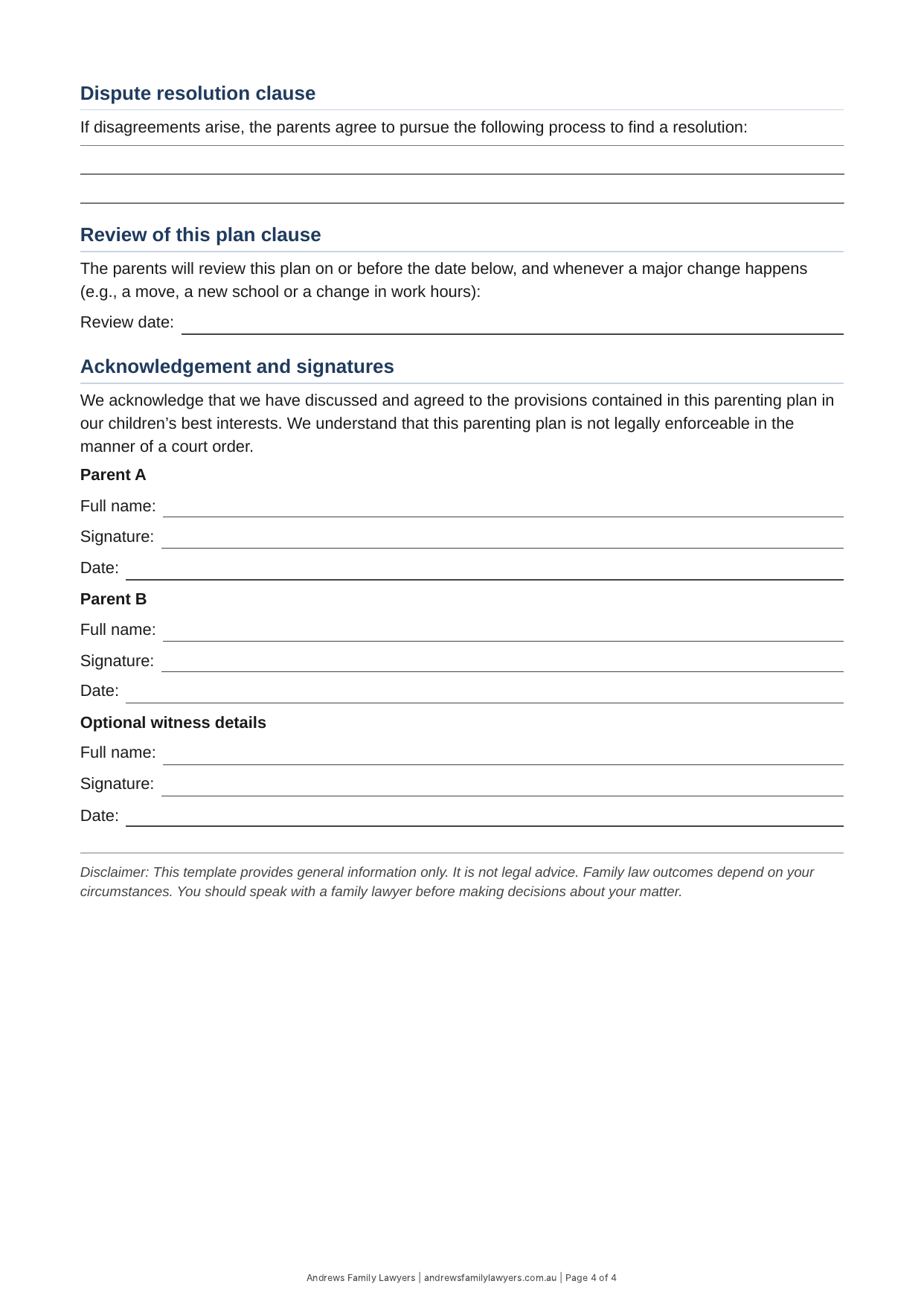
Disagreements are to be expected from time to time, so it’s important to detail how you’re going to handle them. Generally, the first step is to try to resolve the problem between each other over email.
If you’re not able to resolve the issue, you can escalate to family dispute resolution (FDR). A professional FDR practitioner may be better placed to give you the tools to create a practical strategy to deal with the conflict.

When to review your parenting plan
A parenting plan works best when it keeps up with your family. Set a review date in the plan, and look at it again when something big changes. Common triggers include:
- A child starts school or changes schools. The care schedule often needs to fit new hours and term dates.
- Either parent moves. A longer trip between homes can make the current changeover times unworkable.
- A parent’s work hours change. The agreed days may no longer match when each parent is free.
- A child’s needs change as they grow. Older children may need more flexibility around school, sport and friends.
If you can’t agree on a change, family dispute resolution can help. If you need arrangements that the Court can enforce, you can read more about parenting orders.
Parenting plan template
This parenting plan is an agreement between the following parties.